Cringing while grading writing? Your students are probably writing some awkwardly structured sentences. And while there are many reasons “awkwardness” can occur, the easiest (in my opinion) to fix is parallel structure. But it’s going to take more than a quick parallel structure worksheet to tackle the issue.
Teaching grammar can feel like an uphill battle—especially when students don’t immediately see how it connects to their real writing. But parallel structure is one of those concepts that clicks when it’s taught clearly and practiced with intention. Once students understand what parallel structure is—and how it affects clarity and flow—they’ll start to spot awkward writing on their own (and even fix it before you have to!).
If you’re looking for a practical way to teach this concept, here’s a breakdown of how I teach parallel structure in my own classroom using direct instruction, scaffolded practice, and targeted assessment.
Need a quick lesson? Grab my done-for-you Parallel Structure Lesson complete with slideshow, worksheets, exit tickets, student handout, and more!

Prerequisites for Teaching Parallel Structure
Like I said in the introduction, one of the great thing about teaching parallel structure is that even struggling writers can often recognize when something is wrong. So students don’t have to have a robust grammatical foundation to understand this concept.
Nevertheless, I recommend that your students have an understanding of at least the following concepts before teaching parallel structure:
- Parts of a sentence
- Clauses
- Verbals (optional, but helpful for identifying grammatical patterns)
- Commas (optional, but helpful for punctuating lists)
If your students collectively really struggle with parallel structure, then I think it’s ok to make it one of your earlier grammar lessons.
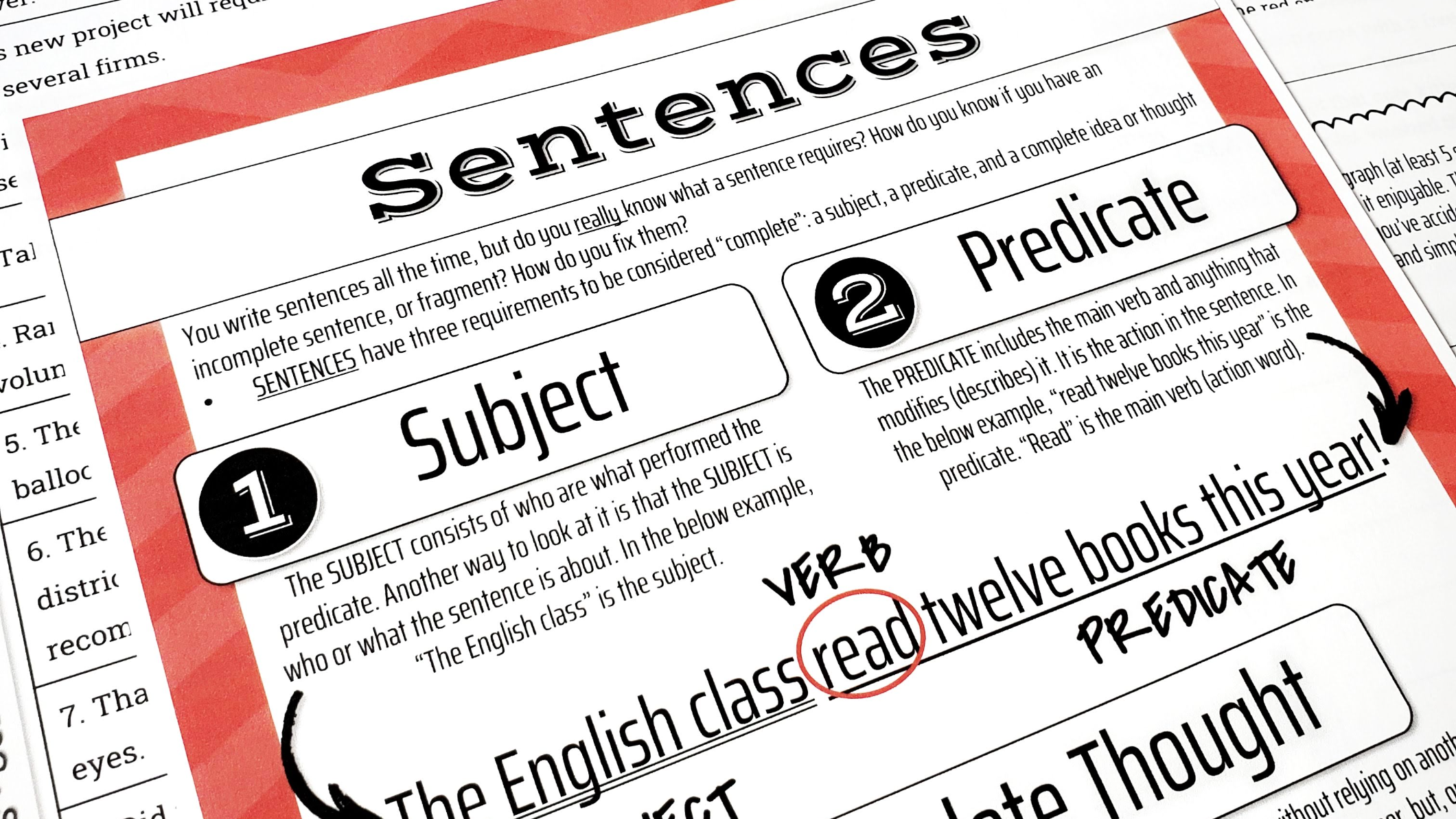
Teach Parallel Structure Step 1: Direct Teaching with Lots of Examples
When introducing parallel structure, I always start with a pre-thinking activity. I give students a few pairs of sentences that are identical except for one thing: one sentence has parallel structure while the other does not.

Then, I ask them which sentences sound the best. Undoubtedly, they’ll choose the ones with parallel structure (although they probably won’t use that terminology yet). I let students talk through why those sentences sound better than the others.
This gives us a solid foundation when we move into a student-friendly definition:
Parallel structure means using the same grammatical pattern when listing ideas or connecting them with conjunctions.
I like to pair this definition with a few intentionally awkward sentences to trigger that gut reaction—“Ugh, that sounds weird.” From there, we unpack why it sounds off and revise the sentence together.
Here’s a quick example:
❌ She likes hiking, swimming, and to bike.
✅ She likes hiking, swimming, and biking.
Even struggling writers can feel the difference between the two. That instinct is a great hook to lead into identifying verbs, gerunds, infinitives, and how mismatches throw off the rhythm of a sentence. (It can also help build confidence in struggling writers!)
My Parallel Structure Lesson also includes side-by-side comparisons, common patterns, and a quick reference list of coordinating and correlative conjunctions—because let’s be real: neither/nor is the sneaky villain of parallelism errors.
Teach Parallel Structure Step 2: Practice with Parallel Structure Worksheets and Exit Tickets
After direct instruction, the next step is lots of guided practice. Students need time to identify errors, rewrite awkward sentences, and write their own examples using proper structure.
I like to teach a tiny concept and then immediately have students work on a parallel structure worksheet or exercise.
For example, I introduce parallel structure and then have students identify on a worksheet sentences that are not parallel. Then, I go over parallel structure in lists. Students immediately work on a parallel structure worksheet that focuses on parallel structure in lists.
I go back and forth: mini-lesson, then worksheet, and repeat until all of the major concepts have been covered.
You don’t have to do it this way, of course. There are many ways you can use parallel structure worksheets in your class to support your lesson:
- As warm-ups after the initial lesson
- As partner or group review
- As targeted practice before a writing assignment
I also use quick exit tickets for formative assessment after each major “chunk” of the lesson. These might ask students to:
- Choose which sentence is not parallel
- Revise a sentence to make it parallel
- Explain why a sentence feels unbalanced
These small moments of practice are low-pressure but give you a good pulse check on who’s getting it. I also believe that smaller, more frequent bursts of practice are the key to getting grammar to finally stick.

Teach Parallel Structure Step 3: Provide Scaffolding
I always taught struggling students, so I build scaffolding into all of my lessons. You should, too! It helps all students–not just the ones who struggle.
In my Parallel Structure Lesson, I provide a parallel structure reference handout that students can use. This has helpful examples, tips, and a list of correlative conjunctions to which they can refer. Not only does it help make students more independent by giving them a resource they can use, but it provides even more examples and another way of absorbing the material.
There are, of course, endless ways to scaffold.
Sometimes during grammar lessons, I’ll scaffold in the moment. For example, if students are working independently on a parallel structure worksheet, I might tell them something like, “8 sentences are not parallel.” That way, they kind of self-check their work on the worksheet and feel more confident with their final answers.
Teach Parallel Structure Step 4: Assess with a Quiz or Writing Assignment

Once students have had plenty of practice, I like to wrap up with a formal Parallel Structure Quiz—nothing fancy, just a short mix of multiple-choice and revision-based questions that test both recognition and application.
Alternatively, you can use writing assignments (like short argumentative paragraphs) to assess whether students are applying parallel structure in their own academic writing. (Be sure to require proper parallel structure in the conventions part of your writing rubrics after teaching it!) This not only reinforces the grammar skill but shows students how grammar serves their writing, not the other way around.

Final Thoughts
Teaching parallel structure doesn’t have to be a dry grammar lecture. With clear instruction, scaffolded practice using parallel structure worksheets, and quick check-ins through quizzes or exit tickets, students will start to recognize the rhythm of clean, professional writing.
And more importantly? They’ll use it.
Don’t have time to put together your own lesson? Grab this complete Parallel Structure Lesson. Inside, you’ll get a step-by-step lesson plan, slideshow, seven student worksheets, student reference handout, exit tickets, and more! It’s everything you need to make those awkward sentences a little more smooth!