
Grammar is the backbone of clear and effective communication, yet we English teachers often shy away from teaching it. It’s daunting! If you’re a high school English teacher, you know the struggle of making grammar lessons engaging while ensuring your students truly grasp the concepts. The good news is that with the right teaching grammar strategies, you can incorporate grammar into your classroom without the overwhelm–for you or your students!
In this blog post, I’ll share some of the most effective teaching grammar strategies that can help your students master grammar with confidence.
Want to skip the prep work while still giving your students meaningful grammar instruction? Grab my entire year of grammar resources right here!

Effective Teaching Grammar Strategies #1: Use Engaging Warm-Ups
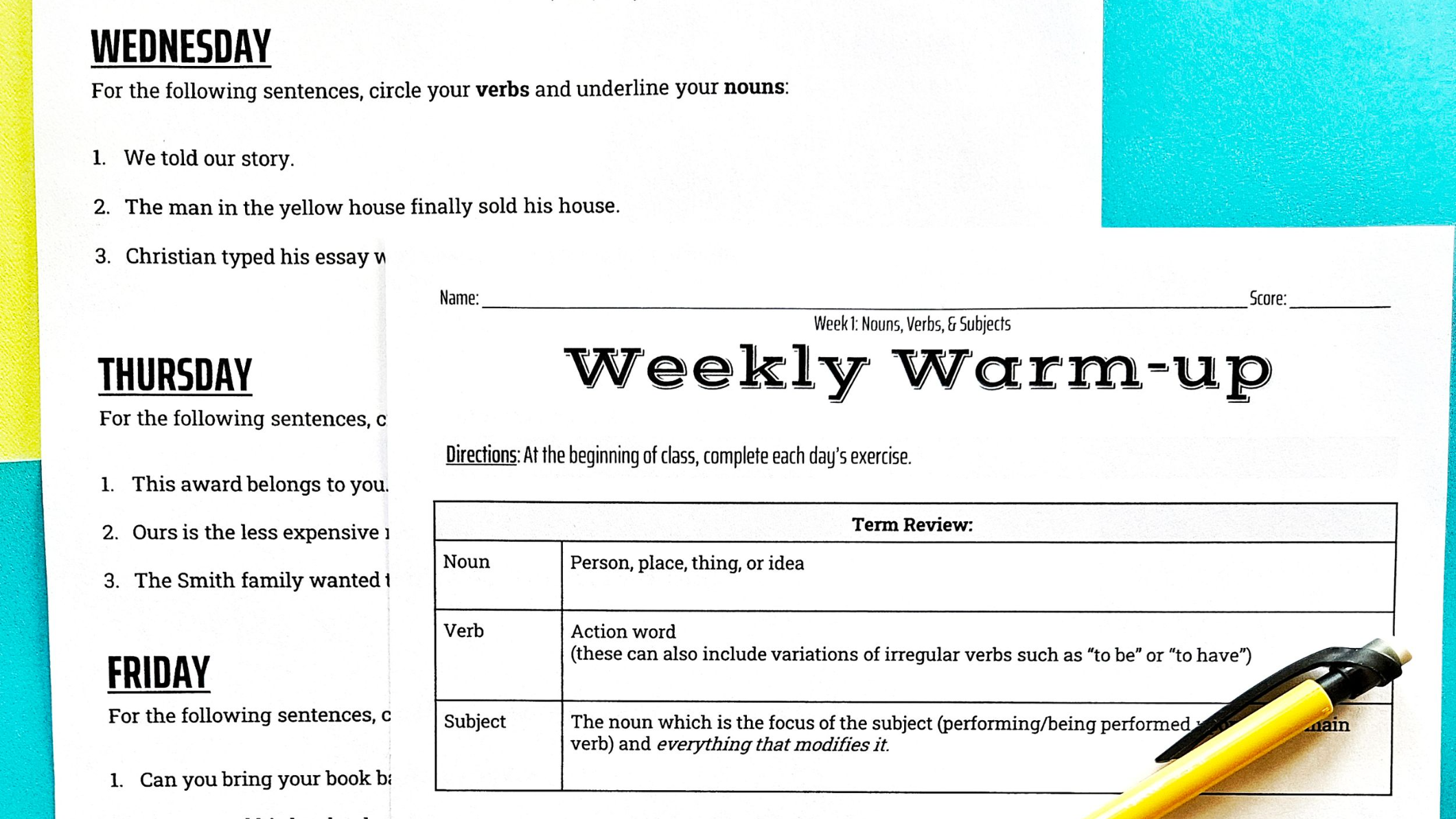
This is my number one tip if you’re new to incorporating grammar into your classroom: use a daily warm-up or bell ringer.

Starting your lessons with a grammar warm-up is a fantastic way to reinforce key concepts without overwhelming your students.
Quick, daily exercises that review grammar rules or challenge students with sentence corrections can be both fun and educational. It also gives you the perfect opportunity to take a quick three minutes to review a term (like “predicate”) or clarify a rule (the Oxford comma).
Better yet, your students won’t feel like they’re drowning.
Over time, these warm-ups build a strong foundation, making more complex grammar topics easier to grasp. Additionally, they’re a great way to assess your students’ understanding and identify areas where they may need extra practice.
Need some tried-and-true grammar warm-ups? Check these out!
Effective Teaching Grammar Strategies #2: Incorporate Contextual Learning
One of the most powerful teaching grammar strategies is to integrate grammar instruction into the context of reading and writing.

Once you’ve begun having conversations about grammar with your students, be sure to point out how grammar is used in the world around them.
Instead of teaching grammar in isolation, incorporate it into the literature your students are already reading or the essays they’re writing. Point out the sentence structures in that beautiful passage. Note how the punctuation makes it easy to tell which characters are speaking.
Discuss with your students how an author used grammar rules in his or her writing and how it impacted the text’s meaning.
This approach not only reinforces grammatical concepts but also shows students how grammar functions in real-world writing.

Effective Teaching Grammar Strategies #3: Leverage Visual Aids and Graphic Organizers

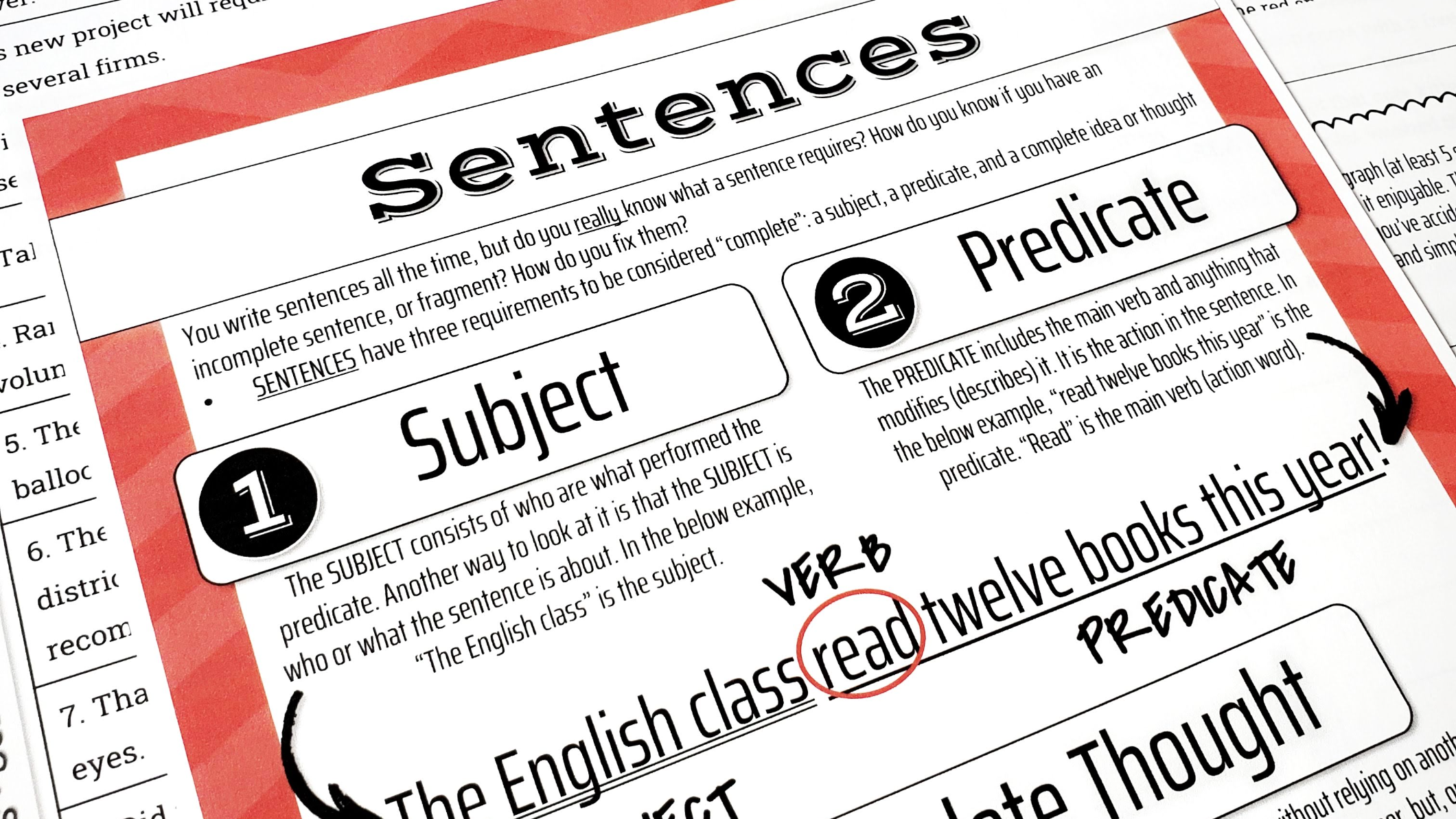
Visual aids, such as anchor charts and graphic organizers, can be incredibly helpful in breaking down complex grammatical rules.
For instance, a chart that visually explains the difference between independent and dependent clauses can make the concept more accessible to visual learners.
When I was in the classroom, I referenced “FANBOYS” so often, that writing them out in a beautiful way on the board was part of my back-to-school chore list.
(I used liquid chalk to keep my fancy writing on the board for months, but you don’t have to. Grab my FREE FANBOYS poster here instead.)

Using color coding to distinguish parts of speech or sentence structures can also make the material more engaging and easier to remember.
In my grammar worksheets and warm-ups, the instructions often state to underline or circle words because I know not everyone has a classroom set of highlighters. But if you do, use them!
Students can annotate grammar just as well as they can annotate literature.
If you’re looking for ways to incorporate visual aids, check out my Grammar Lessons. Each one includes a visual handout with examples to help students remember important concepts.
Want to check out one of my visual aids? Sign up below!
Effective Teaching Grammar Strategies #4: Incorporate Games and Interactive Activities
Grammar doesn’t have to be boring!
Turning grammar practice into a game is one of the most effective teaching grammar strategies. Whether it’s a Jeopardy-style review game, a sentence-building relay race, or a grammar scavenger hunt, these activities make learning fun and memorable.
For example, if you want to review grammar terms, try grammar bingo. Students would all get bingo cards with different grammatical terms. You would call out the definitions. The first student to get Bingo must explain each concept on their card to win.
Games also encourage collaboration and communication among students, reinforcing grammar skills in a dynamic way.

Effective Teaching Grammar Strategies #5: Provide Ample Writing Practice
Writing is the ultimate test of grammar knowledge. Encourage your students to apply their grammar skills through regular writing assignments.

Whether it’s creative writing, essays, or research papers, provide feedback that focuses on both content and grammatical accuracy. An easy way to do this is to make sure that all of your writing rubrics include a grammar, conventions, or mechanics category.
Peer review sessions can also be valuable, as students learn to identify and correct grammar mistakes in each other’s work.
It may be helpful to give students explicit directions to check for specific grammar errors during peer review. You might even consider creating peer-review stations that break down common mistakes into different tasks.
If you’re interested in some Peer-review Stations for your classroom, check out mine.
Effective Teaching Grammar Strategies #6: Offer Differentiated Instruction
Now look. I am a firm believer in direct instruction when it comes to grammar. I think all students benefit from small doses of direct teaching when it comes to conventions and mechanics.
But it doesn’t have to be the only way you teach.
Not all students learn at the same pace or in the same way. Differentiating your grammar instruction by offering varied activities and levels of difficulty can help meet the diverse needs of your students.
For example, while some students might benefit from direct instruction and practice drills, others may excel with self-paced online exercises or peer collaboration. There are some great online resources like NoRedInk and Quill.org that you can use to supplement your own grammar instruction.
And it won’t even require any prep on your part!
Differentiation ensures that all students have the opportunity to succeed in mastering grammar.
Effective Teaching Grammar Strategies #7: Utilize Technology and Online Resources
In today’s digital age, there’s a wealth of online resources available to support your teaching grammar strategies.
Interactive websites, grammar apps, and online quizzes can provide additional practice and instant feedback for your students.

Tools like Google Classroom or Edmodo allow you to assign, track, and grade grammar exercises efficiently, making it easier to monitor student progress and tailor your instruction accordingly.
When you’re giving assessments, quizzes, or tests, I highly recommend you utilize a tool that will take some of the grading work off of your plate.
I have a set of pre-, mid-, and post-assessments for grammar here. While they include printable versions, I would personally use the Google Form versions if I were to assign them to students. Then, I could see exactly what skills challenged students with the click of a button.
Conclusion
Teaching grammar doesn’t have to be a daunting task. If it’s your first time being dedicated to teaching grammar, don’t stress about incorporating all seven of these strategies into your class at once.
Instead, choose one to focus on. Then, next year, you can add another.
By incorporating these effective teaching grammar strategies, you can create a more engaging, dynamic, and successful learning environment for your high school students. If you need help sequencing your grammar lessons, check out this post.
Remember, the key is to make grammar relevant, interactive, and accessible, so your students can not only understand the rules but also apply them with confidence.
If you’re looking to save time while challenging your students, be sure to check out my Year-long Grammar Curriculum!
